
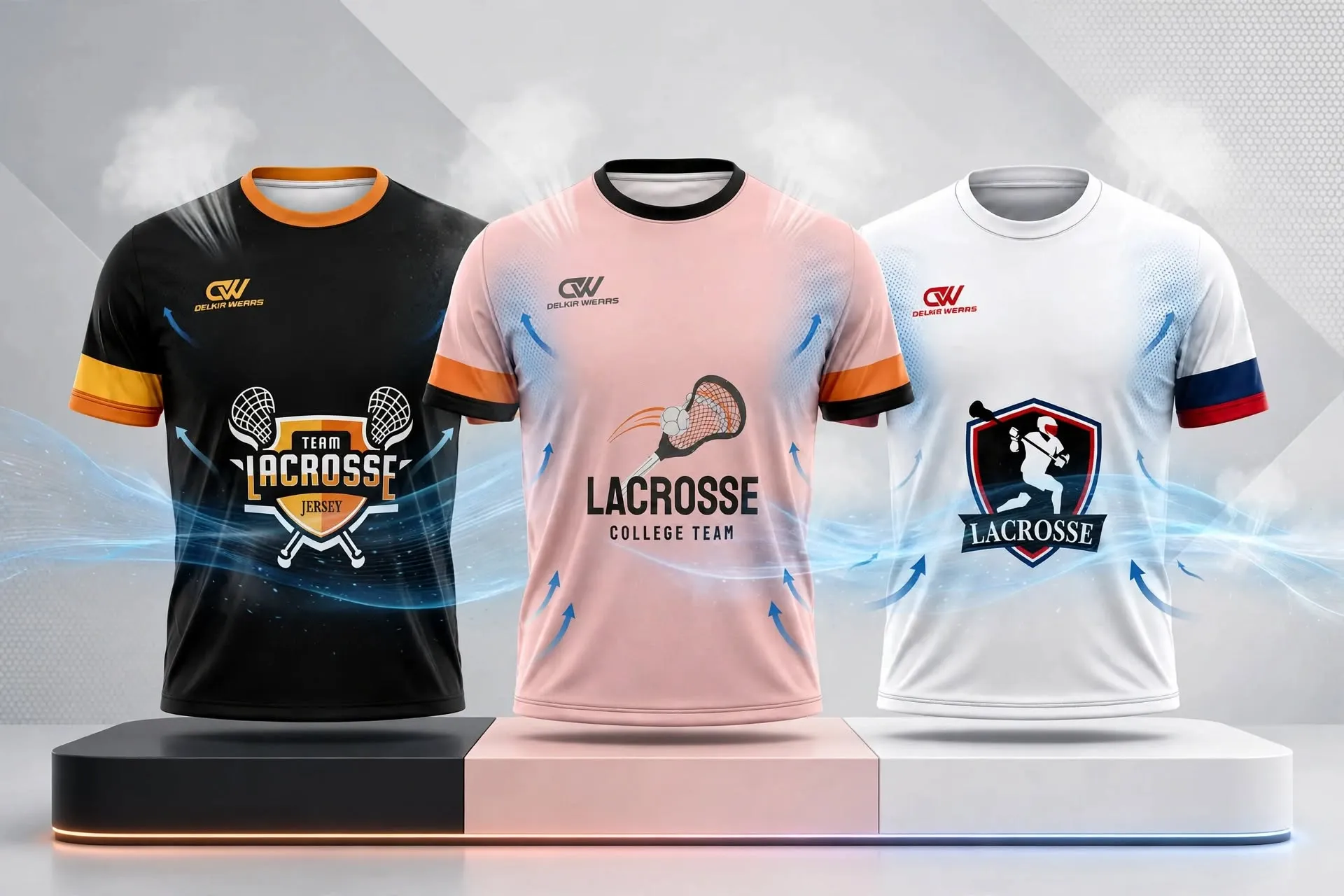
Moisture-Wicking Fabric: How It Works in Team Sportswear
Watch any team in the second half of a hot game and you’ll see the difference fabric makes. Some jerseys hang heavy and dark with sweat, while others look and feel almost dry. That difference usually comes down to moisture-wicking fabric: material built to move sweat off the skin and let it evaporate, instead of holding it like a sponge.
For coaches, uniform buyers, and sportswear brands, “moisture-wicking” appears on almost every spec sheet. This guide covers:
- what moisture wicking actually means and how it works
- which materials do it well
- how it differs from breathable and quick-dry fabric
- what to check before you approve fabric for a team order
What Is Moisture-Wicking Fabric?
Moisture-wicking fabric is a textile designed to pull liquid sweat away from the skin, spread it through and across the fabric, and release it to the air through evaporation. Most moisture-wicking material used in team sportswear is synthetic, and polyester is the most common.
Moisture Wicking Meaning in Plain Terms
If you’re asking what moisture wicking means, think of a candle wick drawing wax upward. A wicking fabric draws sweat outward in a similar way. The goal isn’t to absorb sweat but to move it somewhere it can dry. In short, the moisture wicking meaning is “transport, then evaporate.”
How Does Moisture Wicking Work?
Capillary Action Between Fibers
Sweat moves through the tiny spaces between fibers and yarns by capillary action, the same force that pulls water up a paper towel. Polyester fibers absorb very little water into the fiber itself, so the sweat travels along the fiber surfaces and through the gaps between them. When it reaches the outer face, it spreads over a larger area, and a larger wet area evaporates faster.
The Role of Evaporation
Wicking only moves sweat. The cooling comes from evaporation, which draws heat away from the body.
That’s why conditions matter. In very humid weather, evaporation slows, and even an excellent fabric will feel damper than it does on a dry day. Wicking fabric helps, but it can’t change the weather.
What Makes Some Fabrics Wick Better
Two fabrics both labeled “100% polyester” can wick very differently. Performance comes from how the fabric is engineered, not just from the fiber name.
Fiber Size and Shape
Finer fibers create more and smaller channels for sweat to move through. Some performance yarns also use shaped, non-round fiber cross-sections that add channels along each fiber.
Hydrophilic Finishes
Plain polyester can resist wetting at first. Many performance fabrics are given a hydrophilic (water-attracting) finish so sweat enters the fabric quickly. How long that finish lasts varies, which is why wicking can decline after many washes on some fabrics.
Two-Sided Knits
Some fabrics are knitted with a different structure or yarn on each face. The inside moves sweat away from the skin, and the outside spreads it out to evaporate. These are often described as “push-pull” or two-face constructions.
Moisture-Wicking vs. Breathable vs. Quick-Dry Fabric
These terms are often used interchangeably, but they describe different properties.
| Property | What it means | What drives it |
| Moisture-wicking | Moves liquid sweat away from skin | Fiber type, yarn, finish, knit structure |
| Breathable fabric | Lets air and water vapor pass through | Knit openness, mesh, fabric weight |
| Quick-dry fabric | Releases moisture to the air fast | Low fiber absorbency, thin fabric, wide spreading |
A good team jersey usually combines all three. But they don’t always come together: a light cotton can be breathable yet absorbent, and a wicking fabric can be heavy enough to dry slowly. Our article on polyester vs. mesh jersey fabrics looks at how construction affects breathability in more detail.
Moisture-Wicking Materials Compared
Is Polyester Moisture Wicking?
Generally, yes. Polyester is the most widely used sweat-wicking fabric in teamwear. It absorbs little water, dries quickly, holds its shape, and accepts sublimation printing.
Not every polyester fabric wicks well, though. Yarn type, knit, weight, and finishing all matter, so “polyester” on a spec sheet is a starting point, not a guarantee.
Other Common Performance Fibers
| Material | Typical strengths | Common uses |
| Polyester | Low absorbency, durable, sublimation-friendly | Jerseys, training tops, shorts |
| Polyester-spandex | Wicking plus stretch and recovery | Compression, rash guards, cycling |
| Nylon | Soft hand, strength, stretch | Shorts, fitted layers |
| Polypropylene | Very low absorbency | Base layers |
| Merino wool | Natural moisture handling and warmth | Cold-weather layers, socks |
Why Cotton Holds Sweat
Cotton absorbs moisture into the fiber, so a cotton shirt gets heavier as you sweat and stays damp longer. That makes it comfortable for casual wear but a poor choice for game jerseys. Cotton also can’t be sublimated directly, as we explain in our guide to sublimation on cotton.
What Is Dri-FIT Material?
Dri-FIT is Nike’s trademarked name for its moisture-wicking performance fabrics, which are largely polyester-based. It’s a brand name, not a fabric type. Other brands use their own names for similar technology, and custom manufacturers typically describe comparable fabric as “dry-fit,” “performance polyester,” or simply by composition and weight.
When comparing fabrics, ask for composition, weight, and construction rather than relying on a brand term. Brands making their own products should also avoid using another company’s trademark to describe them.
Best Moisture-Wicking Fabric for Team Sportswear
There’s no single best moisture-wicking fabric. The right choice depends on the sport, the climate, the fit, and how the garment will be decorated.
Match Fabric to Sport and Conditions
Field and Court Sports
For soccer jerseys and shorts, basketball jerseys and shorts, and other high-output sports, lightweight polyester knits are a common choice, often with mesh panels in high-heat zones. Hot climates and summer tournaments favor lighter, more open fabrics.
Fitted and Contact Gear
Close-fitting garments need wicking plus stretch, because the fabric sits against the skin and has to move with the body. Polyester-spandex blends are common in rash guards and training sets and cycling jerseys and bib shorts.
Cold-Weather and Layered Gear
Wicking matters in cold conditions too. Sweat trapped against the skin cools quickly once activity stops, which is why damp cotton feels chilly on the bench or between periods. For fall and winter sports, warm-ups, and base layers, wicking fabrics help keep the layer closest to the skin drier.
Questions to Ask Before You Approve Fabric
- What is the exact fiber composition and fabric weight?
- Does the wicking come from the yarn, the knit structure, a finish, or a combination?
- If a finish is used, how does it hold up after repeated washing?
- Is the fabric suitable for sublimation or your chosen decoration method?
- Is there test data for wicking or drying time?
How to Check Wicking in a Sample
Drop a little water on the inside of a sample and watch. A good wicking fabric absorbs and spreads it quickly rather than letting it bead up. Repeat the test after a few washes.
For formal data, labs use standardized methods, such as AATCC test methods for liquid moisture management and vertical wicking. Ask your supplier what testing, if any, is available for your fabric.
Moisture-Wicking Fabric and Sublimation
Polyester performance fabrics and sublimation work well together. Sublimation dye bonds into the polyester fibers rather than forming a layer on top, so the print doesn’t add a coating that blocks airflow. A heavy surface print, by contrast, can reduce breathability where the ink sits. Our complete guide to sublimation printing for teams covers the process in depth.
Care That Protects Moisture Wicking Technology
Wicking depends on clean fiber surfaces. Fabric softener and dryer sheets can coat the fibers and reduce wicking, so skip them. Wash garments inside out in cool water, and air dry them or use low heat. Our guide to caring for sublimated jerseys covers a full routine for team uniforms.
How Deuka Wears Approaches Performance Fabric
Deuka Wears manufactures custom team uniforms and performance apparel in Sialkot, Pakistan, for buyers in the USA, Canada, and international markets. The range includes:
- polyester team uniforms
- dry-fit polyester polos in our custom polo and sublimation T-shirts line
- polyester-spandex combat and training wear
For multi-season programs and reorders, documenting the fabric specification matters as much as choosing it. Keeping the same composition, weight, and construction means replacement jerseys feel and perform like the originals.
When you request a quote, tell us the sport, climate, fit, and decoration method, and ask about fabric options and samples. Brands developing their own performance line can explore our private label services. When you’re ready, request a quote.
Frequently Asked Questions
Does moisture-wicking fabric keep you cool?
It helps. Moving sweat to the outer surface speeds evaporation, which is how the body sheds heat. Breathable construction and fabric weight also affect how cool a garment feels.
Does moisture-wicking fabric stop working over time?
It can decline on some fabrics, especially when the wicking depends on a surface finish. Fabric softener residue also reduces performance, and proper washing helps.
Is mesh moisture-wicking?
Mesh is mainly about airflow. A polyester mesh can also wick, but it’s the open structure that makes it breathable.
Can moisture-wicking jerseys be sublimated?
Yes. Most moisture-wicking team fabrics are polyester, which is the standard base for sublimation printing.
Do moisture-wicking jerseys still show sweat?
Usually, yes, especially on light colors, because the sweat spreads across the outer surface to evaporate. Some specialized fabrics are engineered to reduce visible sweat marks.
Is moisture-wicking fabric the same as waterproof fabric?
No. Wicking fabric moves sweat through and out of the material. Waterproof fabric is designed to block water from passing through, and it generally doesn’t wick.
Final Thoughts: Look Past the Label
“Moisture-wicking” is one of the most common claims in sportswear, and one of the least specific. Real performance comes from the combination of fiber, yarn, knit, finish, and fabric weight, and it can change after washing.
For team buyers, the practical approach is simple:
- Define how and where the uniform will be worn.
- Ask for composition and construction rather than marketing terms.
- Test a sample yourself.
- Care for the finished garments properly.
Do that, and your team gets uniforms that stay lighter and drier from warm-up to final whistle, game after game.
Leave a comment
TOP RATED PRODUCTS
New posts

November 2, 2026
Print-Ready Artwork: File Formats Jersey Manufacturers Need

November 2, 2026
IBJJF Rash Guard Rules: Ranked Colors for Every BJJ Belt

November 2, 2026
Leather vs Synthetic Boxing Gloves: What Brands Should Pick

November 2, 2026
Clothing Manufacturers in Pakistan: Sportswear Buyer’s Guide

November 2, 2026
Lacrosse Jersey Numbers: Rules for Pinnies and Game Uniforms

November 2, 2026
4-Way Stretch Fabric: Why Fightwear Brands Depend on It

November 2, 2026
Moisture-Wicking Fabric: How It Works in Team Sportswear

November 2, 2026

1 Comment