
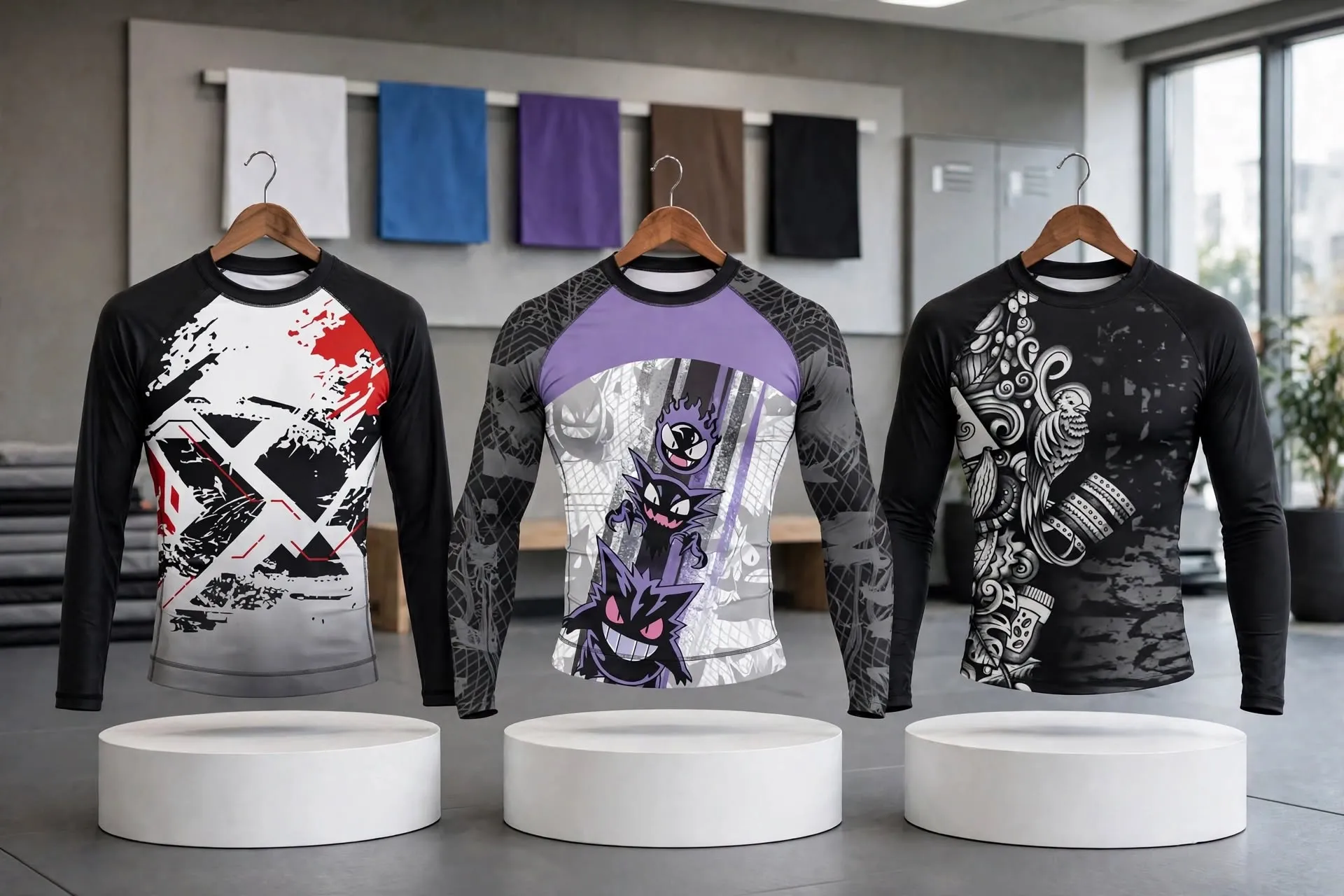
IBJJF Rash Guard Rules: Ranked Colors for Every BJJ Belt
Few things feel worse than training for months, making weight, and then failing the uniform check because of a rash guard. In IBJJF no-gi divisions, the shirt isn’t just about comfort. Its colors are tied to your belt rank, and getting them wrong can keep you off the mat.
This guide explains:
- the IBJJF rash guard rules
- how BJJ belt colors connect to ranked rash guards
- what the rest of the IBJJF no-gi uniform rules cover
- how other organizations such as ADCC compare
- what brands should consider when designing a ranked rash guard line
One important note first: federations update their rules, and events can add their own requirements. Always check the current official rulebook and the event page before you compete or finalize a design.
BJJ Belt Colors: The Rank System Behind Ranked Rash Guards
Ranked rash guards only make sense once you know the belt system they represent.
| Adult belt | Typical stage |
| White | Beginner |
| Blue | Early intermediate |
| Purple | Intermediate to advanced |
| Brown | Advanced |
| Black | Expert, with degrees awarded over time |
Kids’ Belt Colors
Under the IBJJF graduation system, younger athletes use a separate belt sequence between white and the adult ranks: grey, yellow, orange, and green, each with white, solid, and black variations. Youth athletes move into the adult belt system as they get older. If you sell ranked gear for kids, check how the current rules apply to youth no-gi divisions before you design for them.
Senior Black Belt Ranks
After many years at black belt, practitioners may receive the red-and-black coral belt, then the red-and-white belt, and eventually the red belt. These ranks are rare, but they complete the full system of BJJ belt colors.
IBJJF Rash Guard Rules for No-Gi Competition
The points below reflect the IBJJF no-gi uniform rules as commonly reported at the time of writing. Treat them as a guide, not a substitute for the official rulebook.
Color Rules for Ranked Rash Guards
IBJJF no-gi rules permit rash guards in black, white, or black and white, as long as at least 10% of the shirt shows the athlete’s belt rank color. A rash guard made entirely in the rank color is also permitted. In practice:
- A blue belt can wear a black rash guard with blue panels covering at least 10% of the shirt, or a fully blue rash guard.
- A plain black or plain white shirt with no rank color may not pass for colored belt ranks.
- Bright colors that don’t represent the athlete’s rank can cause problems at inspection.
Some older guides describe the rule as “predominantly rank color.” If you see conflicting advice, go by the current official text.
Fit and Sleeves
Rash guards must be close-fitting, made from elastic fabric, and long enough to cover the torso down to the waistband of the shorts. Short and long sleeves are both common. Sleeveless tops are generally reported as not permitted, so confirm the sleeve requirements in the current rules before choosing a cut.
Logos and Designs
Team logos and sponsor marks are common on competition rash guards, but large or busy graphics can make the rank color hard to identify. Keep designs clean and make sure the required rank color stays clearly visible. Officials at the uniform check have the final say.
IBJJF No-Gi Uniform Rules Beyond the Rash Guard
The IBJJF no gi rules also cover what’s worn below the waist.
Shorts
Competition shorts generally must not have functional pockets, zippers, buttons, or hard parts that could cause injury, and must fall within a set length range on the thigh. Shorts colors are commonly limited to black, white, or the athlete’s belt color. Our custom MMA shorts can be built pocket-free for grappling, but always check the current length and construction rules.
Spats and Compression Layers
Rules for spats and compression layers have differed between men’s and women’s divisions, and they have changed over time. Where they’re allowed, they’re generally expected to follow the same color logic as the rest of the uniform. Check the current rulebook for your division before you wear or design them.
What Is a BJJ Ranked Rash Guard?
A BJJ ranked rash guard is a rash guard designed in the colors of a specific belt rank. “Ranked” describes the color scheme, not the size, sleeve length, or fabric. Many athletes wear ranked rashguards for daily training as well as competition, and some academies require them so coaches can identify ranks quickly during no-gi sessions.
| Belt | Common ranked design approach |
| White | White, black and white, or black with white panels |
| Blue | Black or white base with blue panels, or fully blue |
| Purple | Black or white base with purple panels, or fully purple |
| Brown | Black or white base with brown panels, or fully brown |
| Black | Black, or black with white accents |
A product called “blue” isn’t automatically a compliant ranked rash guard. A blue graphic shirt with several other colors may not meet the rules, so look for designs built specifically around the rank-color requirement.
What Does “IBJJF Approved Rash Guard” Mean?
Many products are marketed as an “IBJJF approved rash guard.” In most cases, this means the design was made to meet the published color and fit rules, not that the federation has individually tested or certified that product. Treat the term as a description of intent, and check the actual colors and cut against the current rules. Brands should avoid using “approved” in marketing unless they hold documented approval.
ADCC Uniform Rules and Other Organizations
Not every grappling event follows IBJJF rules. ADCC uniform rules are generally described as less detailed on colors, with more focus on safety: no hard materials, no slippery substances, and clothing suitable for submission grappling. AJP, local promotions, and other organizations publish their own requirements too, and some have color rules of their own.
If you compete across several organizations, a rash guard that meets the IBJJF ranked color rules will often work elsewhere as well, but confirm each event’s rules before you travel.
Designing a Ranked Rash Guard Line
For fightwear brands and academies, a ranked line is one of the most practical products to offer. Every student needs one that matches their belt, and they replace it after each promotion.
Plan inventory by rank. Most academies typically have far more white and blue belts than brown and black belts, so your stock levels and size runs should reflect that rather than splitting quantities evenly across colors.
Keep Rank Colors Consistent
Purple and brown are the colors brands most often get wrong. A brown that looks orange, or a purple that reads as blue, can confuse officials and customers. Use Pantone references and approve physical samples for every rank color, then keep those references for reorders.
Measure the Rank-Color Area
If your design uses a black or white base with rank panels, calculate the rank-color area at the design stage so it clearly exceeds the minimum. Check it across every size, since panels scale differently on small and large garments.
Logos and Panels
Place logos so they don’t break up or shrink the rank-color panels. Clean sleeve, side, or chest panels are easier to check than complex all-over graphics.
Product Labeling
Describe products accurately, for example “designed to meet IBJJF no-gi color rules for blue belt,” rather than “IBJJF approved,” unless you have documented approval. Remind customers to check the current rules for their event.
Fabric and Construction
Ranked rash guards need the same performance as any competition rash guard: polyester-spandex fabric with good stretch and recovery, flat seams, and secure hems. Sublimation prints rank panels and branding directly into the fabric, so the colors won’t crack or peel. Our complete guide to sublimation printing for teams explains how the process works.
Custom Ranked Rash Guards With Deuka Wears
Deuka Wears manufactures custom rash guards and training sets in Sialkot, Pakistan, for BJJ academies, gyms, and fightwear brands in the USA, Canada, and international markets. Our rash guards can be produced with rank-color panels, Pantone color matching, and sublimated branding.
If you’re building a full no-gi or fight line, explore our combat and MMA wear range and our guide on how to start an MMA clothing brand. Brands can use our private label services and custom sublimation and design service. When you’re ready, request a quote.
Frequently Asked Questions
Can I wear a plain black rash guard in IBJJF no-gi?
For black belts, black works. For other ranks, a plain black shirt may not meet the rank-color requirement, so add rank-color panels or choose a ranked design.
How much rank color does an IBJJF rash guard need?
Current reported rules require at least 10% of the rash guard to show the belt rank color when the base is black, white, or black and white. A fully rank-colored rash guard is also permitted.
Are long-sleeve rash guards allowed in IBJJF?
Yes. Long and short sleeves are both commonly worn. Check the current rules for any sleeve-length requirements.
Can team logos go on a ranked rash guard?
Generally, yes. Academy and sponsor logos are common, as long as they don’t hide the rank color or make it hard to identify at inspection.
Do I need a ranked rash guard for training?
Only if your academy requires one. Many athletes use ranked rash guards for both training and competition.
What are the BJJ belt colors in order?
For adults: white, blue, purple, brown, and black. Kids use grey, yellow, orange, and green belts before moving into the adult system.
Final Thoughts: Match the Belt, Then Check the Book
IBJJF rash guard rules come down to a few essentials:
- a close-fitting shirt with sleeves
- either a black, white, or black-and-white base with enough rank color, or a fully rank-colored design
- shorts and bottoms that follow the same safety and color logic
Ranked rash guards make compliance easy for athletes and give brands a product line with built-in repeat demand. Because federations and events update their rules, the best habit for athletes and brands alike is simple: match the belt, then check the current rulebook before every event or production run.
TOP RATED PRODUCTS
New posts

November 2, 2026
Print-Ready Artwork: File Formats Jersey Manufacturers Need

November 2, 2026
IBJJF Rash Guard Rules: Ranked Colors for Every BJJ Belt

November 2, 2026
Leather vs Synthetic Boxing Gloves: What Brands Should Pick

November 2, 2026
Clothing Manufacturers in Pakistan: Sportswear Buyer’s Guide

November 2, 2026
Lacrosse Jersey Numbers: Rules for Pinnies and Game Uniforms

November 2, 2026
4-Way Stretch Fabric: Why Fightwear Brands Depend on It

November 2, 2026
Moisture-Wicking Fabric: How It Works in Team Sportswear

November 2, 2026

Leave a comment