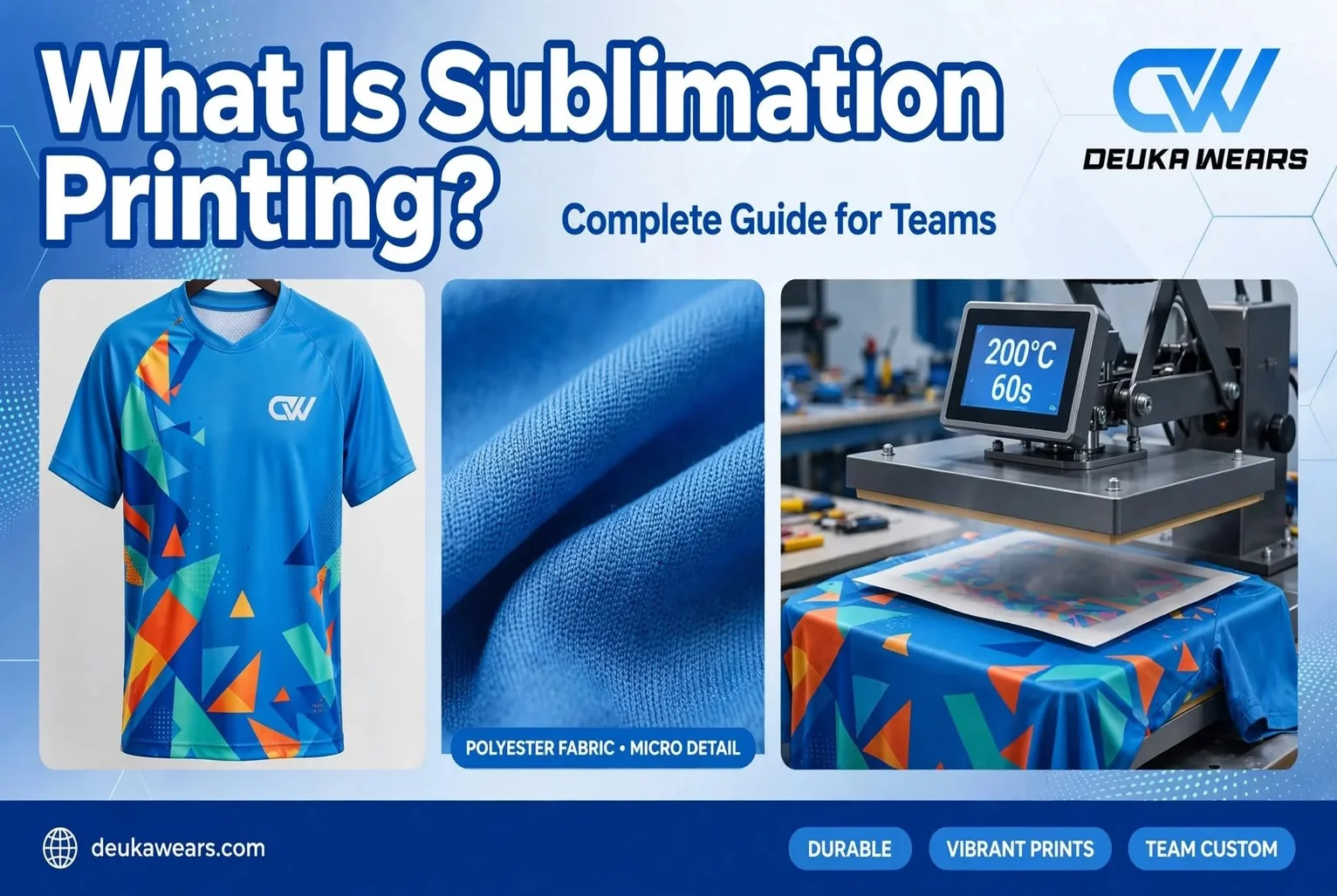
What Is Sublimation Printing? Complete Guide for Teams
If you have ever seen a sports jersey with bright colors, detailed patterns, player numbers, sponsor logos, and graphics covering almost every part of the garment, there is a good chance it uses sublimation printing.
Sublimation is widely used for custom teamwear because the design is transferred into suitable polyester fabric instead of sitting as a thick layer on top. This gives teams more freedom when creating detailed uniforms while keeping the printed area smooth.
But how does sublimation work? What fabrics can be used? Is it better than screen printing? What should a team check before ordering custom uniforms?
This complete guide explains the process in simple terms and covers the practical points teams, coaches, clubs, schools, sports brands, retailers, and uniform buyers should understand before placing an order.
Whether you are ordering team jerseys in the USA or sourcing custom sportswear for buyers in the UK, Canada, Australia, Europe, or the Middle East, understanding the printing method can help you make better production decisions.
What Is Sublimation Printing?
Sublimation printing, also called dye sublimation, is a digital printing process that uses heat to transfer special dye into suitable polyester material.
The design is first printed onto transfer paper. Heat and pressure are then used to move the dye from the paper into the polyester fibers. The dye changes into a gas during the heating stage and bonds with the suitable synthetic fibers.
The important difference is where the color ends up.
With many surface-printing methods, the printed material creates a layer on top of the garment. With sublimation, the dye becomes integrated with the polyester fibers.
This is why a properly sublimated sports garment has a smooth printed surface without a conventional thick layer of ink.
For teams, this creates opportunities for full-color graphics, gradients, logos, names, numbers, patterns, and all-over designs.
How Does Sublimation Printing Work?
The process may look simple, but consistent results require the right fabric, artwork, equipment, heat settings, and quality control.
Step 1: Create the Team Design
The process starts with digital artwork.
A team may provide a logo, color palette, sponsor artwork, player numbers, names, patterns, or a complete uniform concept. The manufacturer then prepares the artwork for the garment.
A custom team jersey may include:
- Team name and logo
- Player names
- Player numbers
- Sponsor logos
- Sleeve graphics
- Side panels
- Color gradients
- Stripes and patterns
- Regional or event graphics
The artwork should be prepared at a suitable resolution and in the correct dimensions for production.
Why Artwork Preparation Matters
A high-quality print starts with high-quality artwork.
A low-resolution logo may look acceptable on a computer screen but become blurry when enlarged for a jersey. Original vector artwork is often preferable when available.
Teams should also check spelling, colors, logo proportions, number placement, and sponsor artwork before production begins.
Step 2: Print the Artwork on Transfer Paper
The approved design is printed onto special sublimation transfer paper using sublimation-compatible ink.
At this stage, the printed paper may not look exactly like the finished garment. The heat-transfer stage changes how the dye appears on the polyester fabric.
This is why teams should approve a digital proof and, where appropriate, a physical sample before moving into large-scale production.
Step 3: Apply Heat and Pressure
The transfer paper is placed against the polyester fabric.
Heat and pressure are then applied using suitable production equipment. The heat allows the dye to transition into a gas and penetrate the polyester fibers.
The exact production settings depend on the fabric, equipment, transfer materials, and manufacturing process.
What Happens During Heat Transfer?
During the heating stage, the sublimation dye moves from the transfer paper into the suitable polyester material.
When the material cools, the dye remains within the fabric structure rather than forming a conventional printed layer on top.
That process is the main reason sublimated sportswear can have a smooth feel and detailed visual appearance.
Step 4: The Design Becomes Part of the Fabric
After the transfer process, the garment is allowed to cool and the transfer material is removed.
The finished design is smooth because there is no conventional thick ink layer sitting on top of the fabric.
For sportswear, this can help preserve the flexible feel of the garment and support the performance characteristics of the chosen fabric.
Why Do Sports Teams Use Sublimation Printing?
Sublimation is popular in teamwear because it combines design flexibility with a smooth finish and durable color when suitable materials and production methods are used. Competitor guides similarly highlight its use for detailed team uniforms, polyester fabrics, and full-color designs.
Full-Color Design Freedom
One of the biggest advantages is the ability to create highly detailed designs.
A team does not have to limit its jersey to a simple logo and one or two colors. Designs can include gradients, multiple shades, detailed patterns, sponsor marks, and complex graphics.
This is useful when a team wants a distinctive uniform rather than a standard blank jersey with a small printed logo.
All-Over Jersey Designs
Sublimation can be used across large areas of a garment.
This makes it possible to create graphics across the front, back, sleeves, and other panels of a uniform. With cut-and-sew sublimation, fabric can be printed before the garment is assembled.
This can create a more continuous design across the finished jersey.
Smooth and Lightweight Finish
Because the dye is integrated into suitable polyester fibers, there is no conventional heavy printed patch sitting on top of the fabric.
This can be useful for athletes who train and compete for long periods. The garment remains flexible while the design is incorporated into the material.
Suitable for Names and Numbers
Team uniforms often require personalization.
Sublimation can incorporate player names, numbers, team names, logos, and other artwork into the main garment design.
This can create a cleaner overall appearance because personalization becomes part of the main artwork instead of being added as a separate decoration.
Good Durability for Team Use
A properly produced sublimated garment can handle regular use because the dye is incorporated into suitable fabric rather than simply forming a surface layer.
However, the printing method alone does not determine garment life.
Fabric quality, dye quality, heat settings, sewing, construction, usage, and garment care all matter.
What Fabric Is Best for Sublimation Printing?
Fabric selection is one of the most important parts of a successful sublimation order.
Sublimation works best with polyester because the dye is designed to bond with suitable synthetic polyester fibers. Team Spirit Sports and Hamco both identify polyester as the primary material for this type of sportswear printing.
100% Polyester
100% polyester is a common choice for sublimated teamwear.
It provides a suitable surface for dye transfer and is widely used in performance sports garments.
For teams ordering custom uniforms, always ask the manufacturer to confirm the fabric composition before production.
Polyester Blends
Some polyester blends can also be used, but results can vary depending on the material.
A lower polyester content can affect the appearance of transferred colors. If color accuracy and strong all-over graphics are important, confirm the exact fabric specification with your supplier.
Consider the Sport Before Choosing Fabric
Fabric should not be selected only because it can accept sublimation.
Consider:
- The sport
- Climate
- Level of activity
- Desired fit
- Breathability
- Moisture management
- Garment weight
- Stretch requirements
- Intended use
For example, a lightweight performance jersey may suit hot-weather training, while another team may prefer a different fabric structure for a more substantial uniform.
Fabric Weight Matters
Fabric weight also affects how a uniform feels and performs.
A lightweight fabric may be suitable for hot-weather sports or high-intensity activity, while a heavier material may provide a different level of structure or coverage.
The best choice depends on the sport, climate, garment design, and intended use.
Always Request the Fabric Specification
Before placing a large order, ask for the fabric composition and relevant performance details.
Do not rely only on terms such as “performance fabric” or “sports polyester.” Confirm what the garment is actually made from.
Can Sublimation Printing Be Used on Dark Jerseys?
This is one of the most important limitations teams should understand.
Standard sublimation does not work like an opaque white-ink printing process. Sublimation dye is not an opaque coating, so the base color of the fabric affects the final appearance.
This means white and light-colored polyester generally provide the clearest base for vibrant sublimated graphics.
For example, a bright yellow sublimation design cannot simply be placed on a dark navy polyester surface and expected to look like yellow ink printed over navy.
Instead, manufacturers can design the garment around this limitation by using appropriate base colors, panels, or other decoration and construction methods.
If your team wants a very dark uniform with light graphics, discuss the complete design with the manufacturer before approving production.
Sublimation Printing vs. Other Printing Methods
Different printing methods solve different problems. The right choice depends on the garment, material, design, quantity, and intended use.
| Feature | Sublimation | Screen Printing | Heat Transfer |
| Best material | Polyester | Many garment fabrics | Many garment fabrics |
| Full-color graphics | Excellent | More limited | Good |
| All-over designs | Excellent | Usually limited | More limited |
| Gradients | Excellent | More complex | Good |
| Surface texture | Very low | Can have a raised feel | Can create a surface layer |
| Names and numbers | Excellent | Possible | Excellent |
| Best use | Custom performance teamwear | Simple graphics and apparel | Smaller custom graphics |
This does not mean sublimation is automatically the right method for every garment.
For a fully custom polyester team uniform with detailed graphics, it can be highly practical. For a cotton fan shirt with a simple one-color logo, another decoration method may make more sense.
Your supplier should recommend the process based on the actual garment rather than using one printing method for every order.
The separate cluster article “Sublimation vs Screen Printing: Which Is Better for Teams?” should expand on this comparison, including design complexity, fabric compatibility, durability, and order requirements.
What Can Teams Customize With Sublimation?
The major benefit of using sublimation for custom teamwear is the amount of design freedom it provides.
Depending on the garment and production method, teams can customize:
- Base colors
- Front and back graphics
- Sleeves
- Side panels
- Team logos
- Player names
- Player numbers
- Sponsor logos
- Stripes
- Geometric patterns
- Gradients
- Repeating graphics
- Special event artwork
For example, a basketball team can combine its team colors with player numbers, sponsor branding, and a custom side-panel pattern.
A soccer club may use a detailed front graphic with matching shorts.
A lacrosse team can build a complete visual identity across its uniform rather than simply adding a logo to a stock garment.
Teams interested in developing customized apparel can explore Deuka Wears’ custom sublimation and sportswear design services when planning a fully customized collection.
How to Design a Custom Sublimated Jersey
A strong sublimated uniform starts with a clear design plan.
The cluster article “How to Design a Custom Jersey: Easy Step-by-Step Guide” can serve as a supporting resource for readers who want to move from the basic idea to a production-ready jersey.
Start With the Team Identity
Before choosing patterns, define:
- Team colors
- Logo
- Team name
- Number style
- Player name style
- Sponsor placement
- Main visual theme
A consistent visual system makes it easier to create matching jerseys, shorts, warmups, and other team apparel.
Plan Every Garment Panel
Do not design only the front of the jersey.
Consider:
- Front
- Back
- Sleeves
- Collar
- Side panels
- Hem
- Shorts or pants
This is especially important for cut-and-sew sublimation because artwork may be divided across multiple garment panels.
Keep Important Details Visible
Logos, numbers, names, and sponsor marks should remain readable.
Avoid placing important information over overly complicated patterns.
A design can be visually impressive while still being difficult to read from a distance.
Sports Jersey Fabrics and Sublimation
The fabric affects both the print and the performance of the finished uniform.
The supporting cluster article “Sports Jersey Fabrics Explained: Polyester vs Mesh” can provide a more detailed comparison for readers deciding which material is appropriate for their team.
Polyester for Full-Color Designs
Polyester is widely used for sublimated sportswear because it is suitable for the dye-transfer process.
It can also be manufactured in different structures and weights for different types of sportswear.
Mesh and Breathability
Mesh fabrics are often selected when airflow and ventilation are priorities.
However, not every mesh fabric will behave identically during sublimation. The manufacturer should confirm whether the specific fabric construction is appropriate for the planned print and garment.
Match Fabric to Performance Needs
A team should consider both appearance and use.
Ask:
- Will the garment be used outdoors?
- Is the sport high intensity?
- Is the climate hot or cold?
- Does the athlete need a high stretch?
- Is ventilation important?
- Will the garment be worn for training or competition?
The best sublimation order is not simply the one with the most colorful design. The garment itself must also suit the sport.
How to Prepare Artwork for Sublimation
Good artwork is essential for good production.
Even high-quality printing equipment cannot completely fix a poor-quality logo or badly prepared design file.
Use High-Quality Logos
Whenever possible, provide original vector artwork for team and sponsor logos.
A low-resolution image taken from a website may look acceptable on a phone but become blurry when enlarged for a full-size jersey.
Confirm Colors
Provide clear brand colors to your manufacturer.
If your team has established colors, share the relevant color references and request a production proof.
Screen colors and printed colors can look different, so approval should happen before bulk manufacturing.
Check Names and Numbers
Before production, carefully check:
- Player names
- Player numbers
- Spelling
- Number placement
- Logo position
- Sponsor placement
- Team name
- Size information
A single spelling mistake can make an otherwise high-quality uniform unusable.
Review the Full Garment Layout
Do not review only the front of the jersey.
Check the complete garment, including:
- Front
- Back
- Sleeves
- Collar
- Side panels
- Shorts or pants
- Number placement
- Sponsor locations
What Should Teams Check Before Ordering Sublimated Uniforms?
A supplier should be able to answer basic production questions clearly.
Use this checklist before approving your order:
| What to Check | Why It Matters |
| Fabric composition | Confirms the material is suitable |
| Fabric weight | Helps determine comfort and performance |
| Size chart | Reduces fitting problems |
| Artwork proof | Catches design mistakes |
| Color references | Helps maintain brand consistency |
| Names and numbers | Prevents personalization errors |
| Sample | Allows physical quality checking |
| Quantity | Helps plan production |
| Production timeline | Reduces deadline risk |
| Packaging | Helps organize bulk delivery |
| Repeat-order process | Makes future team orders easier |
Ask About Samples
For a large team order, a sample can provide valuable information.
Check the fabric feel, stitching, print clarity, colors, sizing, logo placement, and overall construction.
If changes are needed, make them before approving bulk production.
Confirm the Production Timeline
Do not wait until the week before a tournament or season opener to place an order.
Ask the supplier how long artwork approval, sampling, production, quality checking, and shipping are expected to take.
Production and shipping times can vary based on order size, customization, season, and destination.
Build Time for Approval
A custom order usually involves more than manufacturing.
Your schedule may need to include:
- Design submission
- Artwork review
- Revisions
- Size confirmation
- Sample approval
- Bulk production
- Quality inspection
- Packing
- Shipping
Building these steps into your timeline gives your team more room to handle changes.
Common Sublimation Printing Mistakes to Avoid
Choosing the Wrong Fabric
The printing process cannot perform correctly if the material is not suitable.
Always confirm the fabric composition before approving production.
Using Low-Resolution Artwork
A blurry logo can become even more noticeable when enlarged.
Request original artwork from your team’s designer, sponsor, or brand manager whenever possible.
Skipping the Proof
Do not approve bulk production without reviewing the final design.
A proof gives the team an opportunity to catch incorrect colors, spelling, positioning, or missing elements.
Ignoring Sizing
A good design cannot compensate for poor-fitting uniforms.
Use the supplier’s current size chart and collect player measurements when appropriate.
Focusing Only on the Lowest Price
Price is important, but it should not be the only comparison point.
A lower quote may involve differences in fabric, stitching, customization, quality control, packaging, or service.
When comparing manufacturers, look at the complete order rather than the unit price alone.
How to Care for Sublimated Team Jerseys
Sublimated designs are integrated into suitable polyester fabric, but proper garment care is still important for preserving the overall condition of the uniform.
Follow the manufacturer’s care instructions for washing and drying.
Use the Correct Washing Method
Teams should follow the care label rather than assuming every performance jersey should be washed in exactly the same way.
Avoid unnecessary high heat when the garment’s care instructions recommend lower-temperature washing or drying.
Protect the Whole Garment
The printing method is only one part of the uniform.
Stitching, elastic, fabric, seams, collars, and other components can also wear over time.
The cluster article “How to Wash Sublimated Jerseys Without Fading Colors” can provide a dedicated guide for players, coaches, and team managers who want more detailed care instructions.
How Deuka Wears Supports Custom Sublimation Teamwear
Deuka Wears works with buyers looking for custom sportswear and customized team apparel.
For teams, clubs, retailers, sports brands, and other buyers, the important part of a custom order is not simply putting a logo on a garment.
The entire product needs to work together.
That includes the fabric, fit, artwork, colors, construction, personalization, and production requirements.
If you are developing a complete custom sportswear collection, you can also review Deuka Wears’ private label services for a broader approach to branded apparel production.
For buyers ordering larger quantities, planning the order early can also make artwork approval, sizing, production, and delivery easier to manage.
H2: Which Sports Use Sublimation Printing?
Sublimation is suitable for many polyester-based sports garments.
Common examples include:
- Basketball uniforms
- Soccer jerseys
- Lacrosse uniforms
- Football jerseys
- Volleyball uniforms
- Cycling jerseys
- Rugby uniforms
- Training tops
- Performance shirts
- Team shorts
- Esports jerseys
For example, teams looking for fully customized basketball apparel can explore custom basketball uniforms, while other sports can use the same design principles with sport-specific cuts and fabrics.
The important point is to match the printing process with the garment material and the design requirements.
Is Sublimation Printing Right for Your Team?
Sublimation can be a suitable option if your team wants:
- Detailed full-color artwork
- All-over graphics
- Gradients
- Custom names and numbers
- Sponsor logos
- A smooth print finish
- Polyester performance garments
- A consistent custom team identity
It may be less suitable when you need cotton garments, dark base fabrics with light sublimated graphics, or a very simple design that can be produced more efficiently using another decoration method.
The best choice depends on the actual product rather than the printing method alone.
Frequently Asked Questions About Sublimation Printing
What is sublimation printing on a jersey?
Sublimation printing is a heat-based process that transfers special dye into suitable polyester fabric. The design becomes integrated with the fibers rather than forming a conventional layer on the surface.
Does sublimation printing fade or peel?
A properly produced sublimated design does not peel like a surface print because the dye is integrated into suitable polyester fibers. However, overall garment life still depends on fabric quality, production quality, use, and washing.
Can sublimation printing be used on cotton?
Standard dye sublimation is designed for polyester and other suitable synthetic materials. Cotton does not provide the same bonding conditions, so another printing method is normally needed for cotton garments.
Can you sublimate a black or dark jersey?
Standard sublimation works best on white or light-colored polyester because the dye is not an opaque white ink. Dark garments require careful design planning and may need different decoration or construction methods for certain graphics.
Is sublimation good for custom team uniforms?
Sublimation can be very useful for custom team uniforms when the garments are made from suitable polyester and the team wants detailed, full-color, all-over graphics. The final result also depends on fabric, artwork, production, and quality control.
Conclusion: Make Sublimation Printing Work for Your Team
Sublimation printing gives teams a practical way to create detailed, colorful, and highly customized sportswear. Its main strengths are the ability to produce complex graphics, all-over designs, personalized names and numbers, and smooth prints on suitable polyester garments.
But successful sublimation starts before the printing stage.
Teams should choose the right fabric, prepare high-quality artwork, check colors, approve the complete garment proof, confirm sizing, review a sample when appropriate, and plan production and shipping timelines carefully.
For teams, sports brands, clubs, retailers, and other buyers looking for custom sportswear, Deuka Wears can help turn a design concept into a production-ready apparel order.
If you are ready to develop custom sublimated teamwear, explore wholesale and bulk sportswear ordering or contact Deuka Wears to discuss your requirements and request a quote.

Leave a comment