
How to Wash & Care Sublimated Jerseys Without Fading Colors
Sublimated jerseys are designed for repeated sports use, but proper care still matters if you want the colors, fabric, fit, and overall appearance to stay in good condition.
The good news is that sublimated jerseys are generally straightforward to care for. Unlike many surface-applied prints, sublimation places the dye into suitable polyester fibers, so there is no traditional printed layer sitting on top of the fabric that can peel or crack.
However, that does not mean a sublimated jersey should be treated like an ordinary T-shirt.
Hot water, excessive heat, harsh chemicals, rough washing conditions, and poor storage habits can affect the polyester fabric, seams, stretch, moisture-management performance, and overall appearance.
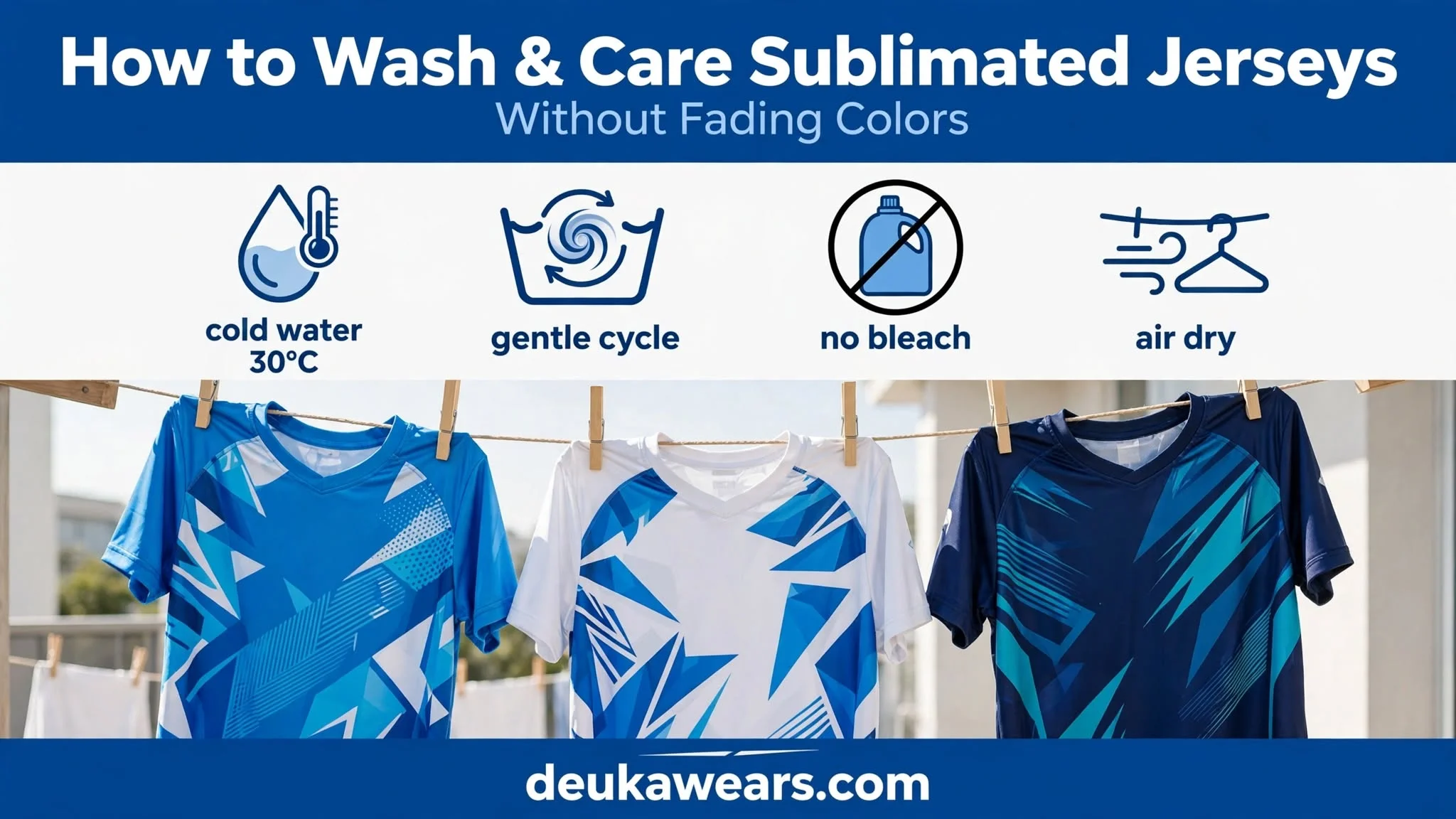
If you are wondering how to wash sublimated jerseys without fading colors, the basic routine is simple:
- Check the care label.
- Turn the jersey inside out.
- Wash in cold water.
- Use a mild detergent.
- Select a gentle cycle where appropriate.
- Avoid bleach and fabric softener.
- Air dry whenever possible.
- Keep the jersey away from excessive heat and direct harsh sunlight.
The following sections explain why each step matters and how teams, players, and sportswear buyers can build a reliable jersey-care routine.
1. Why Proper Care Matters for Sublimated Jerseys
A custom jersey has to deal with more than normal everyday clothing.
During training and competition, it may be exposed to:
- Sweat
- Dirt
- Grass
- Mud
- Dust
- Body oils
- Food and drink stains
- Repeated washing
- Friction
- Heat
- Outdoor sunlight
The sublimated design itself is relatively durable because the dye becomes part of the polyester material rather than forming a separate surface layer. This is one of the reasons sublimation is widely used for detailed sportswear designs.
But the jersey is more than its print.
The fabric, stitching, elastic areas, collar, fit, and moisture-management characteristics also need protection.
What Can Poor Washing Habits Damage?
Incorrect care can contribute to:
- Dull-looking colors
- Fabric wear
- Loss of stretch
- Reduced comfort
- Odor buildup
- Weakened seams
- Shape changes
- Damage to additional heat-applied or embroidered details
That is why jersey care should focus on protecting the entire garment, not only the sublimated artwork.
2. Can Sublimated Jerseys Be Machine Washed?
Yes, many sublimated sports jerseys can be machine washed, provided the garment’s care label allows it.
The important part is controlling the washing conditions.
A practical general routine is:
Cold water + gentle washing + mild detergent + inside out + air drying.
This approach is widely recommended across sublimated jersey care guides.
Should You Always Check the Care Label?
Yes.
Different jerseys can contain different fabric constructions, trims, elastic components, embroidery, patches, or additional decoration.
Follow the Garment-Specific Instructions First
The care label should take priority over general advice.
Check the Washing Temperature
If the label specifies a maximum washing temperature, follow that instruction rather than assuming every polyester jersey has identical requirements.
When in Doubt, Choose the Gentler Option
For a custom sublimated jersey with no unusual care requirements, cold water and a gentle washing approach are generally safer choices than high-temperature or aggressive washing.
3. How to Wash Sublimated Jerseys Without Fading Colors
If you want a simple step-by-step process, use the following routine.
Step 1 — Turn the Jersey Inside Out
Before putting the jersey into the washing machine, turn it inside out.
This reduces direct friction against the outside surface during washing and can also help protect additional graphics, logos, numbers, embroidery, or other decorative elements.
Step 2 — Use Cold Water
Cold water is the preferred option for many sublimated sports jerseys.
High temperatures can put unnecessary stress on synthetic performance fabrics and other garment components. Current jersey-care guides consistently recommend cold washing for this reason.
Step 3 — Select a Gentle Cycle
A gentle cycle can reduce unnecessary mechanical stress.
You generally do not need an aggressive wash cycle simply because a jersey was worn during a demanding match or training session.
Step 4 — Use a Mild Detergent
Use a detergent appropriate for performance clothing and follow the detergent manufacturer’s recommended amount.
Avoid assuming that more detergent means a cleaner jersey. Excess detergent can leave residue on performance fabrics.
Step 5 — Wash With Similar Items
Whenever possible, wash jerseys with similar lightweight sportswear.
Avoid washing them together with:
- Heavy towels
- Jeans
- Garments with exposed zippers
- Items with hooks
- Rough fabrics
- Heavily soiled workwear
These items can increase friction during the wash.
Step 6 — Remove the Jersey Promptly
After the cycle ends, remove the jersey instead of leaving it sitting wet inside the washing machine for an extended period.
This can help reduce unwanted odor development and unnecessary creasing.
4. What Detergent Should You Use for Sublimated Jerseys?
A mild detergent is generally a practical choice for sublimated sports jerseys.
The objective is to clean sweat, dirt, and body oils without exposing the performance fabric to unnecessary harsh chemicals.
What Should You Avoid?
Avoid using:
- Bleach
- Harsh whitening products
- Excessive detergent
- Aggressive chemical cleaners
- Fabric softener unless specifically recommended by the garment manufacturer
Bleach and harsh chemicals can affect colors and polyester performance, while fabric softener can leave a coating on performance fibers that may interfere with moisture management.
Why Is Fabric Softener Usually Avoided?
Fabric softeners are designed to leave a coating on fibers.
For performance sportswear, that coating may interfere with the fabric’s intended moisture-management characteristics. Multiple jersey-care guides specifically recommend avoiding fabric softener.
Don’t Use Softener Just to Control Odor
If a jersey smells after washing, adding more fabric softener is not the best solution.
Deal With the Source of the Odor
Wash the jersey promptly after heavy use, allow it to dry completely, and avoid leaving sweaty jerseys compressed inside a gym bag.
5. How to Remove Stains From Sublimated Jerseys
Sports jerseys can collect stains that ordinary laundry may not remove immediately.
The safest approach is usually to treat the stain before the main wash rather than repeatedly increasing wash temperature or using aggressive chemicals.
Grass Stains
Grass stains are common on soccer, baseball, football, and other outdoor sports jerseys.
Start by gently removing loose dirt and treating the affected area according to the fabric and stain-removal product instructions.
Avoid using bleach simply because the jersey is white.
Mud and Dirt
Allow heavy mud to dry enough to remove loose material first.
Then rinse or soak the affected area according to the garment’s care instructions before washing normally.
Do not aggressively scrub wet mud deeper into the fabric.
Sweat and Body Odor
Sweat odor can become more difficult to remove when a jersey is left damp for long periods.
Wash heavily used jerseys promptly and allow them to dry completely.
Food and Drink Stains
Treat food and drink stains as soon as practical.
Blot rather than aggressively rubbing the stain, then follow the care instructions for the fabric.
6. How Often Should You Wash a Sublimated Jersey?
A jersey worn during a game or heavy training session should generally be washed after use rather than being left sweaty in a bag.
The exact frequency depends on:
- How heavily the jersey was worn
- Sweat level
- Climate
- Training intensity
- Whether it was worn directly against the skin
- Whether it has visible dirt or odor
For team uniforms, washing after games and heavy practices is a practical routine.
What About Light Training Sessions?
If the jersey was worn briefly and did not become heavily soiled, the care routine may differ.
However, avoid storing a damp or sweaty jersey in a closed bag simply because it does not look dirty.
Give the Jersey Time to Dry Between Uses
Do Not Leave a Sweaty Jersey in Your Sports Bag
A closed gym bag can trap moisture and odor.
Air It Out as Soon as Possible
After training or competition, remove the jersey from the bag and allow it to air out until it can be properly washed.
7. How Should You Dry Sublimated Jerseys?
Drying is one of the most important parts of jersey care.
Air drying is generally the safest option for maintaining the fabric and avoiding unnecessary heat exposure.
Air Drying Is the Preferred Method
After washing:
- Remove the jersey promptly.
- Gently reshape it if needed.
- Hang or lay it according to the garment’s construction.
- Allow it to dry completely.
- Keep it away from excessive heat.
Can You Put a Sublimated Jersey in the Dryer?
If the garment care label allows tumble drying, use the lowest appropriate heat setting.
However, air drying is generally preferable when practical because it avoids unnecessary high-temperature exposure.
Avoid High Heat
High heat can place unnecessary stress on synthetic fabrics, elastic components, and other garment details.
Do Not Use the Dryer as the Default Setting
If air drying is available, it is usually the simpler care choice.
Keep the Jersey Away From Direct High Heat
Do not place the jersey directly against radiators, heaters, or other intense heat sources.
8. Can You Dry Sublimated Jerseys in Direct Sunlight?
Outdoor air drying can be convenient, but prolonged exposure to strong direct sunlight is not ideal for maintaining textile colors.
If possible, dry the jersey in a shaded or well-ventilated area.
Why Is Shade Better?
The goal is to allow the jersey to dry naturally without adding unnecessary environmental stress.
This is particularly relevant when a team has brightly colored uniforms that need to maintain a consistent appearance across an entire roster.
Choose Airflow Over Intense Heat
Use a Shaded Drying Area
A shaded location with good airflow can allow the garment to dry without prolonged exposure to intense direct sunlight.
Make Sure the Jersey Is Completely Dry
Before folding or storing the jersey, make sure there is no remaining moisture in the fabric.
9. Can You Iron a Sublimated Jersey?
It is generally better to avoid ironing directly over the sublimated design.
Direct high heat can be unnecessary for a garment designed for athletic use, and some jerseys may include additional details that are sensitive to heat. Care guides commonly recommend avoiding direct ironing of sublimated graphics.
What Should You Do If the Jersey Is Wrinkled?
Hang the jersey after washing and allow the fabric to relax naturally.
For garments where steaming is permitted, use a suitable low-temperature approach and keep heat away from sensitive decoration.
Protect the Printed and Decorative Areas
Never Press a Hot Iron Directly Onto the Design
Avoid placing a hot iron directly over names, numbers, logos, or sublimated artwork.
Check the Care Label Before Using Heat
If the manufacturer provides specific ironing or steaming instructions, follow those instructions first.
10. How to Keep Sublimated Jerseys Smelling Fresh
Odor is a common issue with sportswear because sweat, moisture, and body oils can remain in performance fabrics.
The solution is not to overload the jersey with fragrance or fabric softener.
Wash Jerseys Promptly
Try to wash jerseys soon after heavy use.
The longer sweaty clothing remains damp and compressed, the more difficult odor management can become.
Dry the Jersey Completely
A jersey should be completely dry before it goes into a drawer, equipment bag, or storage container.
Avoid Long-Term Damp Storage
Never Store a Damp Jersey
Even if the jersey appears mostly dry, check areas such as:
- Collar
- Underarms
- Side panels
- Seams
Let Difficult Areas Dry Fully
These areas can retain moisture longer than the main body of the garment.
11. How to Store Sublimated Jerseys Between Games
Proper storage is especially important for teams with multiple jerseys.
Before storage:
- Wash the jersey.
- Make sure it is completely dry.
- Fold it neatly.
- Store it in a clean, dry location.
- Keep it away from excessive heat and moisture.
Should You Store Jerseys in a Sports Bag?
A sports bag is useful for transportation, but it is not ideal for long-term storage.
Sweat and moisture trapped inside a closed bag can create odor and dampness.
How Should Teams Store Multiple Jerseys?
Teams should keep jerseys organized by:
- Player
- Size
- Number
- Home/away set
- Training/game use
This reduces unnecessary handling and helps team managers keep uniforms organized throughout the season.
Protect the Jersey During the Off-Season
Wash Before Long-Term Storage
Do not put a sweaty or dirty jersey away at the end of the season.
Store Only Completely Dry Garments
Make sure each jersey is completely dry before long-term storage.
This is particularly important for teams storing uniforms for several months between seasons.
12. How Should Teams Care for a Full Set of Sublimated Jerseys?
Individual players may know how to care for their own jersey, but team managers have an additional challenge: keeping an entire uniform set looking consistent.
This matters for teams because different washing habits can lead to differences in appearance and garment condition over time.
Create One Standard Jersey Care Routine
A simple team-wide routine can include:
- Cold washing
- Inside-out washing
- Mild detergent
- No bleach
- No fabric softener
- Air drying where practical
- Proper storage
These recommendations are consistent with current sublimated jersey care guidance from multiple sportswear sources.
Give Players Written Care Instructions
A team can provide a short care card when distributing jerseys.
This can be particularly useful when players or parents are responsible for washing individual uniforms.
Keep Care Instructions Simple
Use a Short Checklist
For example:
Wash cold → turn inside out → use mild detergent → skip bleach and softener → air dry → store dry.
Put the Instructions Where Players Can See Them
A printed card, team communication channel, or digital team handbook can make the instructions easier to follow throughout the season.
13. Does Proper Washing Prevent Sublimated Colors From Fading?
Proper washing can help preserve the overall appearance of a sublimated jersey, but no garment should be described as completely immune to color change under every condition.
Sublimation is designed so the dye becomes integrated into suitable polyester fibers rather than forming a conventional surface print. This means there is no typical printed layer to crack or peel in the same way as some surface-applied graphics.
However, fabric condition and color appearance can still be affected by heat, chemicals, prolonged environmental exposure, abrasion, and general garment wear.
What Are the Biggest Care Mistakes?
Common mistakes include:
- Washing in very hot water
- Using bleach
- Using excessive detergent
- Using fabric softener
- Drying at high heat
- Ironing directly over graphics
- Leaving sweaty jerseys in closed bags
- Storing garments while damp
Focus on Fabric Care, Not Just Print Care
Protect the Polyester
The sublimated design is integrated into the fabric, so protecting the fabric itself is an important part of maintaining the jersey’s appearance.
Maintain the Whole Garment
Care should cover the fabric, stitching, stretch areas, collar, seams, and any additional decoration—not only the sublimated artwork.
14. Sublimated Jersey Care for Different Sports
The basic care routine can work across many sports, but the type of dirt and wear can vary depending on the activity.
Soccer Jerseys
Soccer jerseys can encounter grass, mud, sweat, and outdoor dirt.
Prompt stain treatment and cold washing are useful parts of a regular care routine.
Teams developing custom soccer apparel can also review Soccer Jerseys & Shorts when planning a complete teamwear collection.
Basketball Jerseys
Basketball jerseys are frequently exposed to sweat during high-intensity indoor activity.
Regular washing and complete drying can help maintain freshness and comfort.
For teams developing basketball uniforms, Basketball Jerseys & Shorts are an example of teamwear where fabric performance and customization work together.
Baseball Jerseys
Baseball jerseys can encounter grass, dirt, clay, and outdoor stains.
A gentle pre-treatment process can be preferable to aggressive scrubbing or harsh chemicals.
Teams working on baseball uniforms can explore Full-Button & V-Neck Baseball Jerseys as part of their product planning.
Cycling Jerseys
Cycling jerseys can experience significant sweat and outdoor exposure.
Prompt washing after intensive rides can help prevent odor from becoming more difficult to manage.
For cycling-specific teamwear, Cycling Jerseys & Bib Shorts are designed around the particular requirements of cycling apparel.
15. Sublimated Jersey Care for Sportswear Brands and B2B Buyers
Jersey care is also important for sportswear brands and manufacturers.
When a brand sells custom sublimated jerseys, the product experience does not end when the customer receives the garment.
Clear care instructions can help customers understand how to maintain the product and can reduce avoidable complaints caused by incorrect washing or drying.
Why Should Brands Provide Care Instructions?
A simple care guide can explain:
- Washing temperature
- Washing cycle
- Detergent recommendations
- Products to avoid
- Drying instructions
- Ironing instructions
- Storage recommendations
This can be included on a care label, packaging insert, product page, or customer instruction card.
What Should Be Included With Team Orders?
For wholesale or team orders, buyers can provide the same care instructions to every player.
This helps establish a consistent routine across the entire roster.
Connect Product Development With Customer Education
Add Care Instructions to the Product Experience
When developing a new custom sportswear collection, brands can plan the care instructions alongside the product specifications.
Keep the Instructions Consistent With the Actual Garment
Care instructions should always reflect the garment’s actual fabric, construction, and manufacturer-approved care requirements.
For brands sourcing sportswear in bulk, broader production considerations can be reviewed in Wholesale & Bulk Sportswear Ordering.
16. How Sublimation Fits Into Custom Sportswear Care
Sublimation is particularly useful for custom sportswear because it allows detailed designs to become part of suitable polyester fabric.
That means teams can create jerseys featuring:
- Team colors
- Logos
- Names
- Numbers
- Patterns
- Gradients
- Detailed graphics
For teams that want to understand how the printing process works before choosing their jersey design, What Is Sublimation Printing? Complete Guide for Teams provides a useful introduction to the process.
Understanding the printing method also helps explain why care instructions focus so heavily on protecting the fabric and garment construction, rather than treating sublimation like a conventional surface print.
Why Is Care Still Important If Sublimation Is Durable?
Sublimation can be highly durable, but the entire jersey still has to withstand washing, drying, movement, and repeated wear.
Think Beyond the Printed Design
Protect the Fabric
The fabric determines much of the jersey’s comfort, appearance, breathability, and long-term condition.
Protect the Complete Product
A well-maintained sublimated jersey should be cared for as a performance garment—not simply as a printed piece of clothing.
17. How Deuka Wears Can Support Custom Sublimated Jerseys
For teams, sportswear brands, retailers, wholesalers, and international buyers, jersey performance begins before the washing stage.
Fabric selection, garment construction, sublimation, design, sizing, and production specifications all influence the finished product.
Deuka Wears supports businesses developing custom sportswear where these elements need to work together.
For brands developing custom collections, Custom Sublimation & Sportswear Design can be relevant when the project requires custom artwork and sublimation-based sportswear development.
For businesses building a broader combat-sportswear collection, the manufacturing and sourcing process is also discussed in How to Start an MMA Clothing Brand: Complete Manufacturing Guide.
The same product-development approach can be applied to team uniforms, retail sportswear collections, and private-label apparel: define the fabric and design requirements first, then make sure the final garment has clear and practical care instructions.
Frequently Asked Questions About Sublimated Jersey Care
How should I wash a sublimated jersey?
Turn the jersey inside out, wash it in cold water using a gentle cycle and mild detergent, and avoid bleach and fabric softener. Air drying is generally preferred when practical.
Can sublimated jerseys go in the washing machine?
Yes, many sublimated jerseys can be machine washed when the garment’s care label permits it. Cold water, appropriate detergent, and a gentle washing approach are commonly recommended.
Will washing fade a sublimated jersey?
Proper washing is designed to help preserve the jersey’s appearance. Sublimation integrates the dye into suitable polyester fibers, but excessive heat, harsh chemicals, abrasion, and general garment wear can still affect the fabric and overall appearance.
Can I put a sublimated jersey in the dryer?
Check the garment care label first. If tumble drying is permitted, lower heat is generally preferable to high heat. Air drying is a simple alternative that avoids unnecessary heat exposure.
Can I use fabric softener on a sublimated jersey?
It is generally better to avoid fabric softener on performance sportswear because it can leave a coating on the fibers that may interfere with moisture-management properties.
Conclusion:
Learning how to wash sublimated jerseys without fading colors does not require a complicated laundry routine.
The most important habits are simple:
- Check the care label
- Turn the jersey inside out
- Wash with cold water
- Use a mild detergent
- Avoid bleach
- Avoid fabric softener
- Use a gentle cycle where appropriate
- Air dry whenever practical
- Avoid direct high heat
- Never store a damp jersey
- Treat stains promptly
- Wash jerseys soon after heavy use
Sublimation provides a durable way to create detailed custom sportswear designs because the dye becomes integrated into suitable polyester fibers rather than forming a conventional surface print.
But long-term jersey care is about more than protecting the design. The fabric, seams, fit, stretch, breathability, and overall garment construction also need proper treatment.
For teams, brands, retailers, wholesalers, and international sportswear buyers, providing clear care instructions is a simple part of creating a better product experience.
With the right washing, drying, and storage habits, custom sublimated jerseys can stay comfortable, presentable, and ready for repeated use throughout the season.

Leave a comment